For Angie Osborn, helping a patient means more than connecting them to their next medical appointment.
As a Bilingual Case Manager with Project Access West Tennessee, Angie works with patients navigating specialty care and a healthcare system that can be disorienting. Along the way, she encounters a common challenge: patients struggling with mental health.
“Many of my patients have some sort of mental health concern, whether it’s stress or even more severe problems,” Angie said.
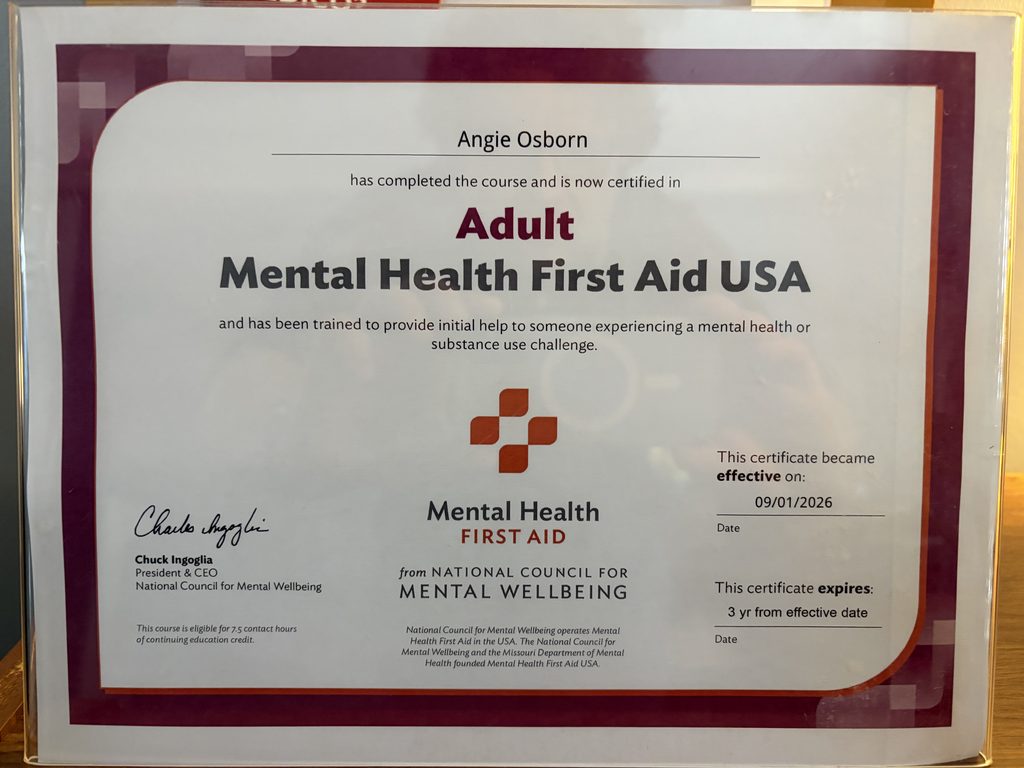
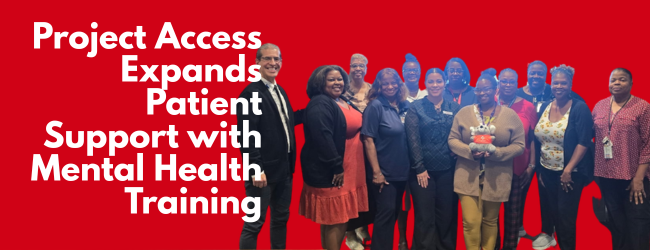
Wanting to be better prepared for those conversations, Angie recently completed Mental Health First Aid training through the National Council for Mental Wellbeing. She found the opportunity through the Shelby County Health Department and asked Project Access Director Lia Hernandez for approval to participate.
“It was a one-day training to give us tools to better serve patients suffering with mental health,” Angie said. “I’m more able to recognize when somebody is having a problem or is in distress, and more able to guide and direct them to resources or places they can go.”
The training was something Angie sought out herself. Previous experiences had sparked an interest in learning more about mental health and finding practical ways to help patients experiencing a crisis.
“The number one goal at Project Access is to give patients the best care possible in any given situation, for any given individual,” said Lia. “Opportunities for our team members to add useful skills to their professional tool set help us connect patients with the best possible care plan for each set of circumstances.”
The course focused not on diagnosing or treating mental illness, but on recognizing signs, communicating effectively, and connecting people with appropriate resources.
“I’ve learned how to be open with people and how to not be judgmental about what they share with me,” Angie said. “I’m using different words when serving certain patients, letting them know things are okay, and it’s helping me find the right solutions to whatever problems they’re going through.”
Angie and her cohort also received resource guides and contact information offering patients additional support, adding another layer to the work she already does helping Project Access patients navigate healthcare.
“You have to stay neutral in how you advise them,” she said. “It’s not something that I’m advising them because my emotions are involved, but something that can actually help them.”
Angie earned a Mental Health First Aid certification that can be renewed in three years, with opportunities for additional training for higher certification levels.
More importantly, she returned to Project Access West Tennessee with information she can put to use immediately.
“People do not know where to go, and some patients have complications that make it even more challenging,” Osborn said. “I felt that if I could build my skill set, I could be better at helping the patient more deeply with what they need. If you don’t create clear communication channels with patients, they might not get the exact care they need.”
Project Access West Tennessee is primarily funded by a grant from the Tennessee Department of Health and helps uninsured individuals access health care, connecting them to local physicians, hospitals, and local health clinics that donate their services to the individuals and families in need. Project Access West Tennessee is also funded in part by your gifts to Memphis Medical Foundation.