
By Clint Cummins, CEO
I have been privileged to write this legislative article for several years now. Last year, I expressed a theme of compromise in the spirit of making ANY progress. It’s a common approach to advocacy strategy. This year, I’m pleased to share that a more offensive strategy is in the works as Memphis Medical Society (MMS), Tennessee Medical Association (TMA), Mid-South MGMA (MSMGMA), and many others embark on an ambitious agenda aimed at tackling familiar challenges (insurance and payment reform) and emerging ones (artificial intelligence).
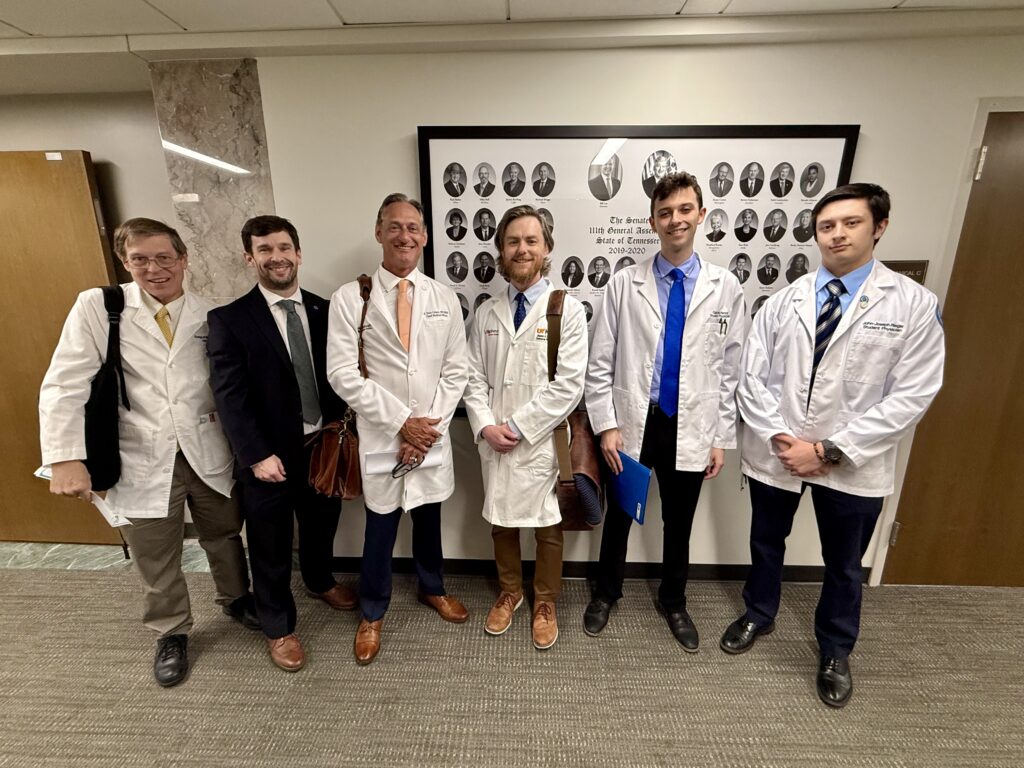
This article was written March 9th, 2026, so the status of these could be changed by the time you read this. On March 3rd, MMS, MGMA, and TMA hosted yet another successful Day on the Hill. There is phenomenal interest in the work we do, and I hope that translates into better healthcare for Mid-Southerners. A special thank you goes to our partners at University of Tennessee Health Science Center and Baptist University College of Medicine for contributing to the great turnout. It is a special experience to watch early career physicians take interest in healthcare advocacy, and even more special to watch them interact with and be mentored by their senior colleagues.
ONE BIG BEAUTIFUL INSURANCE BILL SB2155/HB2619
Sen. Shane Reeves (R-Murfreesboro) | Rep. Sabi Kumar (R-Springfield)
The bill makes comprehensive changes to various health insurance statutes to ensure companies fairly and transparently adjudicate claims. It also expands prior authorization approval for treatment of a chronic condition from 6 months to 12 months. Finally (and possibly most importantly), it prohibits a health insurance entity from automatically downcoding a claim submitted by a provider unless there is first a review of the patient’s medical record.
As of March 9, 2026, this bill has been referred to the House Insurance Committee and the Senate Commerce and Labor Committee will hear it on March 10, 2026.
MEDICAL NECESSITY SB1753/HB1770
Sen. Ferrell Haile (R-Gallatin) | Rep. Brock Martin (R-Huntingdon)
The bill adds three new medical specialties (medical virtualist, clinical informatics, lifestyle medicine) to the list of persons engaged in the practice of medicine. The bill clarifies that both medical doctors and osteopathic physicians may determine the appropriateness of treatments or procedures for patient conditions and that all doctors making medical necessity decisions be governed by their respective medical boards.
As of March 9, 2026, this bill has passed the Senate and is currently expected to be heard by the House Health Subcommittee on March 11, 2026.
TENNCARE PROVIDER RATE INCREASES SB2080/HB2046
Sen. Bo Watson (R-Hixson) | Rep. Ryan Williams (R-Cookeville)
This bill increases reimbursement rates to Medicare levels in three service areas: primary care and behavioral health, maternal care, anesthesia.
TennCare’s reimbursement rates to physicians, physician assistants, and advance practice registered nurses remain significantly below those of Medicare and commercial payers, creating a persistent payment gap that threatens access to care across Tennessee. In rural regions, where health care provider shortages are most acute, low reimbursement rates make it increasingly difficult to recruit and retain clinicians. Rural providers operate on thin margins, and TennCare’s rates often fall short of covering the actual cost of care delivery. Without targeted rate increases, these communities risk losing access to critical services, forcing patients to travel long distances or not seek care at all.
As of March 9, 2026, this bill has been referred to the Senate Commerce and Labor Committee and House Insurance Committee.
EXPANDING NON-PHYSICIAN SCOPE OF PRACTICE
A variety of bills have been introduced with the intent of expanding the scope of practice for several non-physician clinicians. Memphis Medical Society and TMA maintain the positions that physician-led, team-based care is the best solution for the citizens of our state in order to maintain the safest and highest quality healthcare our citizens deserve. Other groups argue that expanding scope of practice for their profession will increase access to care and allow their practitioners to maximize their training.
Optometrists Performing Surgery SB2076/HB1952
Psychologists Prescribing SB0911/HB0996
Independent Practice for APRNs and PAs SB2245/HB2554 and SB2243/HB2555
Test and Treat for Pharmacists SB2242/HB2557
RURAL HEALTH FUNDING
It can be argued that that all state and federal healthcare legislation affects rural citizens’ healthcare. Now, more than ever, there is an obvious concerted effort from state and federal governments to increase funding to impact rural citizens. I encourage each of you to monitor the Rural Health Transformation (RHT) funding that will soon see Tennessee release Requests for Funding Proposals for the investment of its $206,888,882 annual funding for the next five years. Furthermore, the Tennessee Rural Health Care Center of Excellence (where I’m honored to serve on the Steering Committee) will administer $7,000,000 in planning and implementation grants to address rural health concerns across the state. While there is no specific legislation to monitor, these two investments will likely spur future legislation.
Finally, I would like to give a special shoutout to the local leaders who volunteer their time to advocate on behalf of these issues. Several board members from Memphis Medical Society and Mid-South MGMA were present at TMA’s Day on the Hill, and it is their presence and leadership which continues to move the needle on these important issues.
And to the rest of you – I encourage you to get involved via these organizations or on your own as a constituent. Change starts with you!